
Guide to Antique Shows, Estate Sales and Resale
Before You Go: Do Your Homework
The best antique shoppers show up prepared. I cannot stress this enough!
Measure first, shop second.
Before you leave the house, pull out your tape measure and write down the exact dimensions you're working with — the wall length, the ceiling height, the doorframe width (because that beauty has to actually get into your house). Keep a running list in your phone's notes app. I keep mine labeled "dimensions" and update it every time a space changes.
Know your style anchors.
Spend ten minutes looking through your saved inspiration images before you go. What's the throughline? Lots of warm wood? Clean lines? Curved silhouettes? Knowing this keeps you from falling for something that doesn't actually belong in your home — no matter how good the price is.
Research the sale or market beforehand.
Estate sales often post preview photos. Antique markets usually list their dealers. Scan these ahead of time so you know whether it's worth the trip and which dealers to head to first.
Set a budget — and a "stretch" budget. Decide what you're comfortable spending before you're standing in front of something gorgeous and talking yourself into it. Give yourself a ceiling and maybe a 20% stretch ceiling for a truly exceptional find.
What's Trending Right Now
and Worth Seeking Out!
The design world has been gravitating toward a few specific categories in secondhand shopping, and for good reason — these pieces are beautiful, well-made, and nearly impossible to replicate new.
Rattan and wicker furniture is having a serious moment.
Vintage pieces from the 1960s–80s are especially good — the joinery is tighter and the frames are more substantial than most of what's being made today.
Primitive and early American furniture
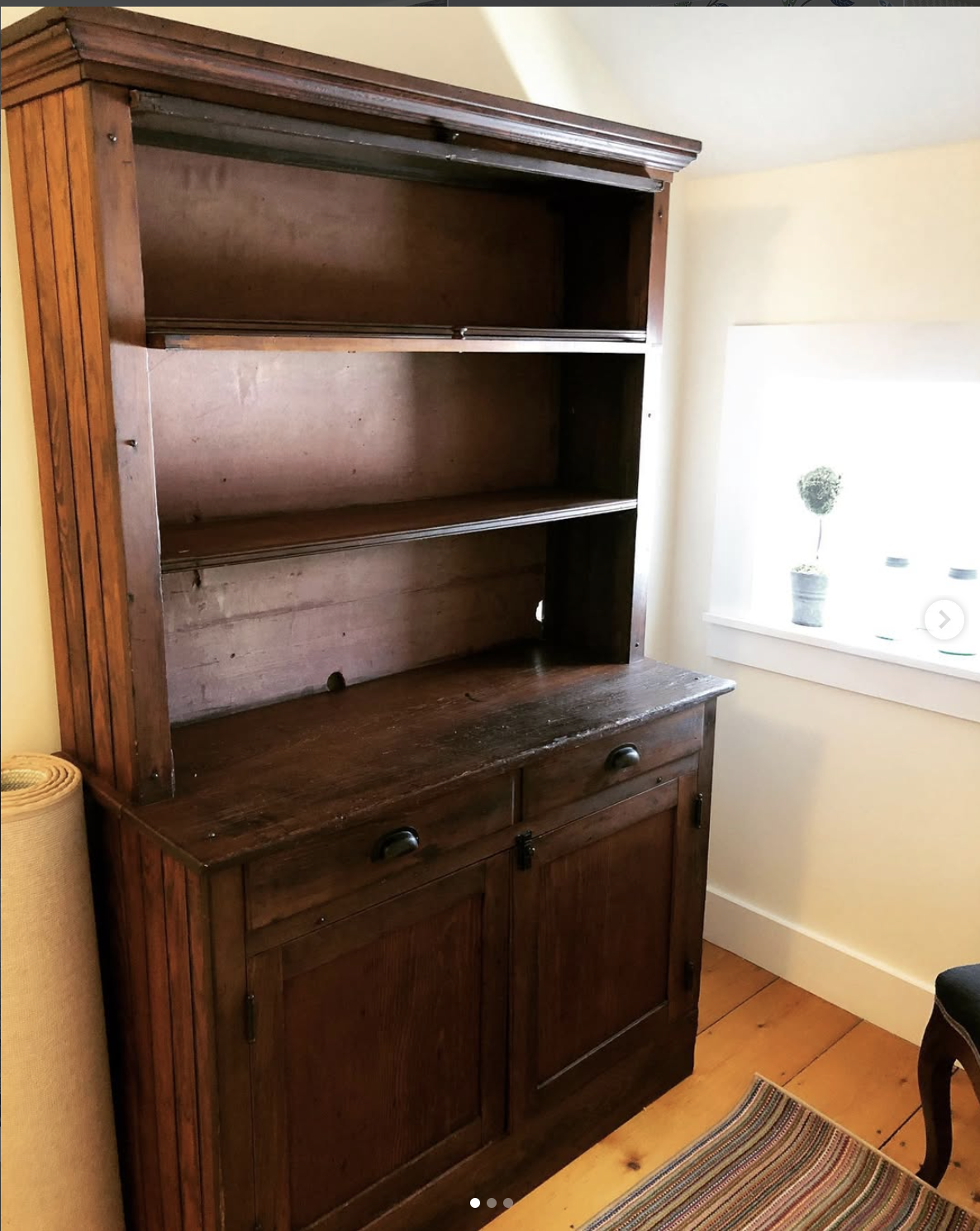
Think simple painted pieces, dry sinks, hutches, pie safes. These bring enormous warmth into a contemporary space without feeling costumey. Vermont has incredible sources for these.
Sculptural lamps and lighting
Midcentury ceramic bases, brass pharmacy lamps, candlestick lamps with unusual profiles. Good vintage lighting is one of the single highest-impact changes you can make in a room, and new versions rarely have the same character.
Upholstered pieces with good bones.
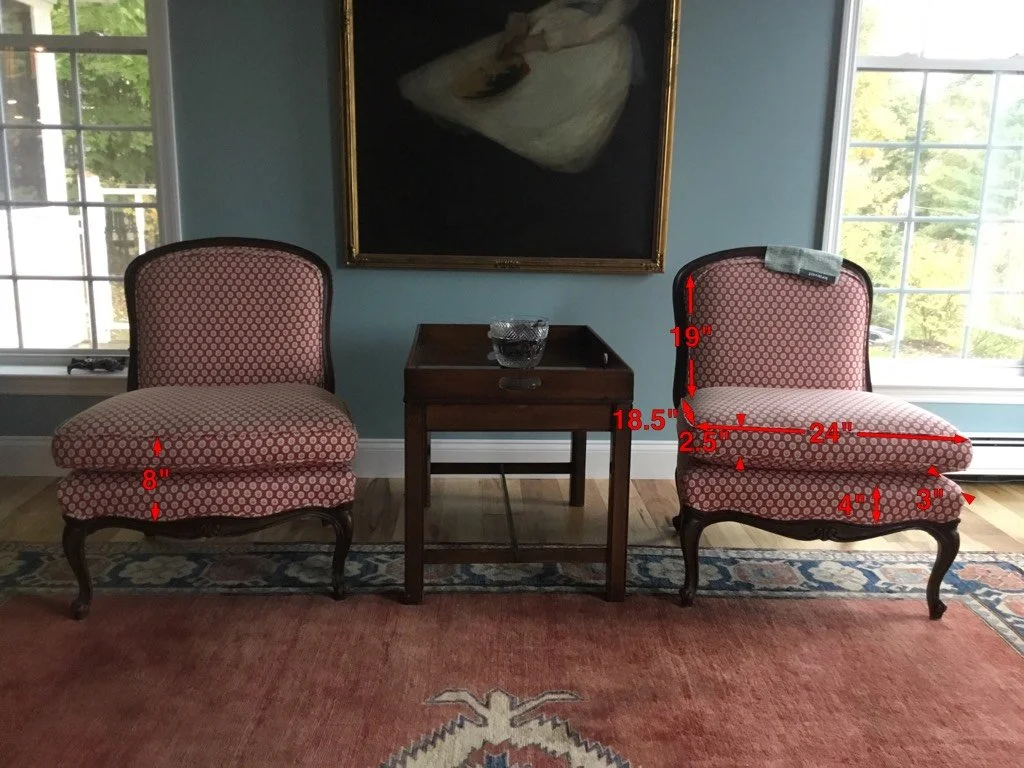
A settee, a wingback, an accent chair — if the frame is solid, a recovered piece is a treasure. Don't let ugly fabric scare you off. Fabric is cheap (relative to the piece). A good frame is not.
Architectural salvage
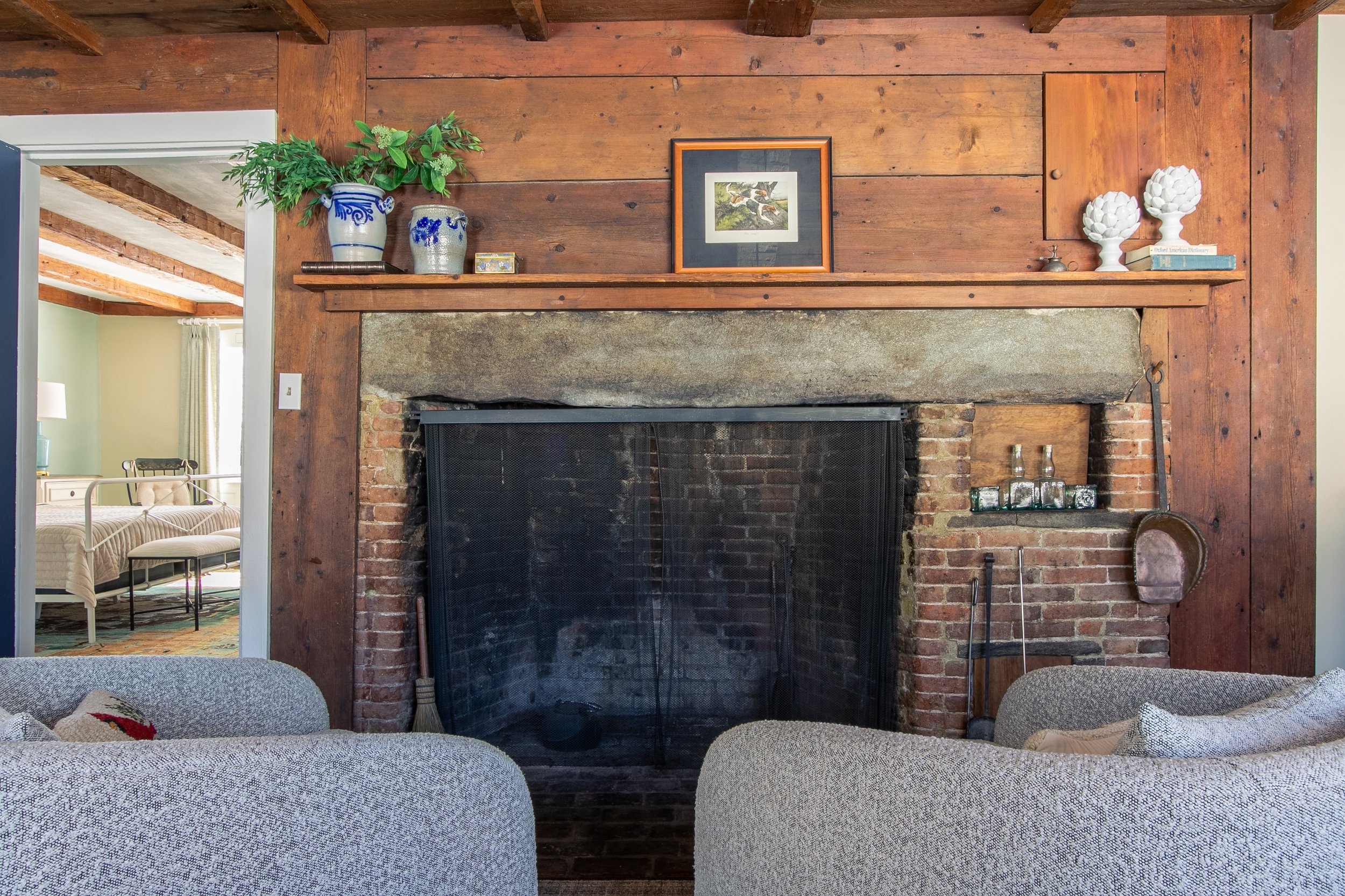
Old doors, mantels, corbels, decorative brackets. These add history to a space in a way nothing else can.

Finding Furniture with Good Bones
This is the skill that separates experienced secondhand shoppers from the rest. Here's what I look for:
For case goods (dressers, tables, cabinets):
Dovetail joints in drawers — these indicate hand or early machine craftsmanship and a commitment to durability
Solid wood versus veneer — veneer isn't always bad, but solid wood can be refinished more aggressively
Level surfaces — set something on top to see if it rocks
Drawer function — pull them all the way out, check the slides, smell them (musty can be addressed; water damage is trickier)
Hardware — original hardware is a PLUS, even if it needs polishing
For seating:
Sit in it, rock in it, push on it — does the frame flex? Any creaking?
Check the legs for repairs or wobble
Press on the seat cushion — is there a spring structure underneath, or has it collapsed?
Look at the arms and corners for wear patterns — these tell you about the piece's history
For tables:
Flip it over or crouch down and look at the underside — this is where the real quality shows
Check the apron joinery
Look at leg attachment — are they bolted, pegged, or just screwed in?
The rule I live by: If the structure is sound and the style is right, almost everything else is fixable.

How to Barter Respectfully
Negotiating at antique markets and estate sales is completely normal — dealers expect it. But there's a right way to do it, and it matters!
DO ask. A polite "Is there any flexibility on the price?" is a perfectly reasonable question. The worst they can say is no.
DON’T lowball insultingly. If something is priced at $400, offering $50 is not negotiating — it's dismissive. A reasonable starting point is 15–25% below the asking price.
DO bundle when you can. "I'm interested in these three pieces — what could you do if I took all of them?" This is often more effective than trying to negotiate individual pieces down dramatically.
DO use cash. Dealers often will come down more for cash because it saves them the card processing fees. Worth noting.
BE kind. These are often people who have a genuine love for the objects they're selling. Compliment something specific about the piece — where it came from, the craftsmanship, the color — before you start talking price. It changes the whole interaction.
KNOW when to just pay the price. If something is clearly priced fairly, paying it is the right thing to do. Supporting good dealers means they keep showing up.
When to Walk Away
This is the hard one. Here's my honest list of deal-breakers.
Structural damage to wood joints — wobbly legs that have been re-glued multiple times, separating mortise-and-tenon joints
Active mold or mildew smell — some musty is fine, active mold is not
Upholstery with pet damage or staining in the cushion structure — once it's in the foam, it's in the foam
Veneer that is lifting extensively — small spots, fine; half the surface, walk away
Pieces that are "close enough" — this is the sneaky one. If you're standing there trying to convince yourself that it almost works, it doesn't. The right piece won't require a convincing monologue.
And the most important rule: Never buy something just because the price is good. A bad fit at a great price is still a bad fit — and it will live in your garage for five years before you donate it.
What to Bring With You
All of this info can be found in my handy infograph— check it out here!
In your bag:
Tape measure (a 25-foot one — longer than you think you need)
Phone with your dimensions list and inspiration photos saved
Flashlight or use your phone flashlight — for looking inside cabinets, under tables, behind pieces
Cash
A small notebook or use your phone notes
Furniture moving pads or moving blankets if you're bringing a truck
Bungee cords or ratchet straps if you're transporting anything that day
In your head:
Your room dimensions
Your style direction
Your budget
An honest sense of what you actually have space for
One Last Thing
Secondhand shopping rewards patience. You will not find the perfect piece every single time you go out — and that's part of it. The hunt is genuinely fun. I have clients who tell me the best part of their living room isn't the sofa or the rug; it's the little side table they found at an estate sale in Middlebury for eighteen dollars. That table has a story. It has history. No showroom can sell you that.
Trust your eye, do your homework, and don't be afraid to leave empty-handed. The right things find you eventually!
Next up in the series: Learn the Resale Walk: How to Shop Antiques & Secondhand like a Designer.
MJG Interiors is a full-service interior design studio based in Vermont. We work with clients across New England on projects that balance livability, beauty, and a deep respect for the spaces we're working in. If you have questions about shopping or sourcing for your home, we'd love to hear from you.