
Day 161: Shop Your House
Here is the full story of how those two vintage slipper chairs became the stars of a cozy, colorful living room — and the design process that got us there.
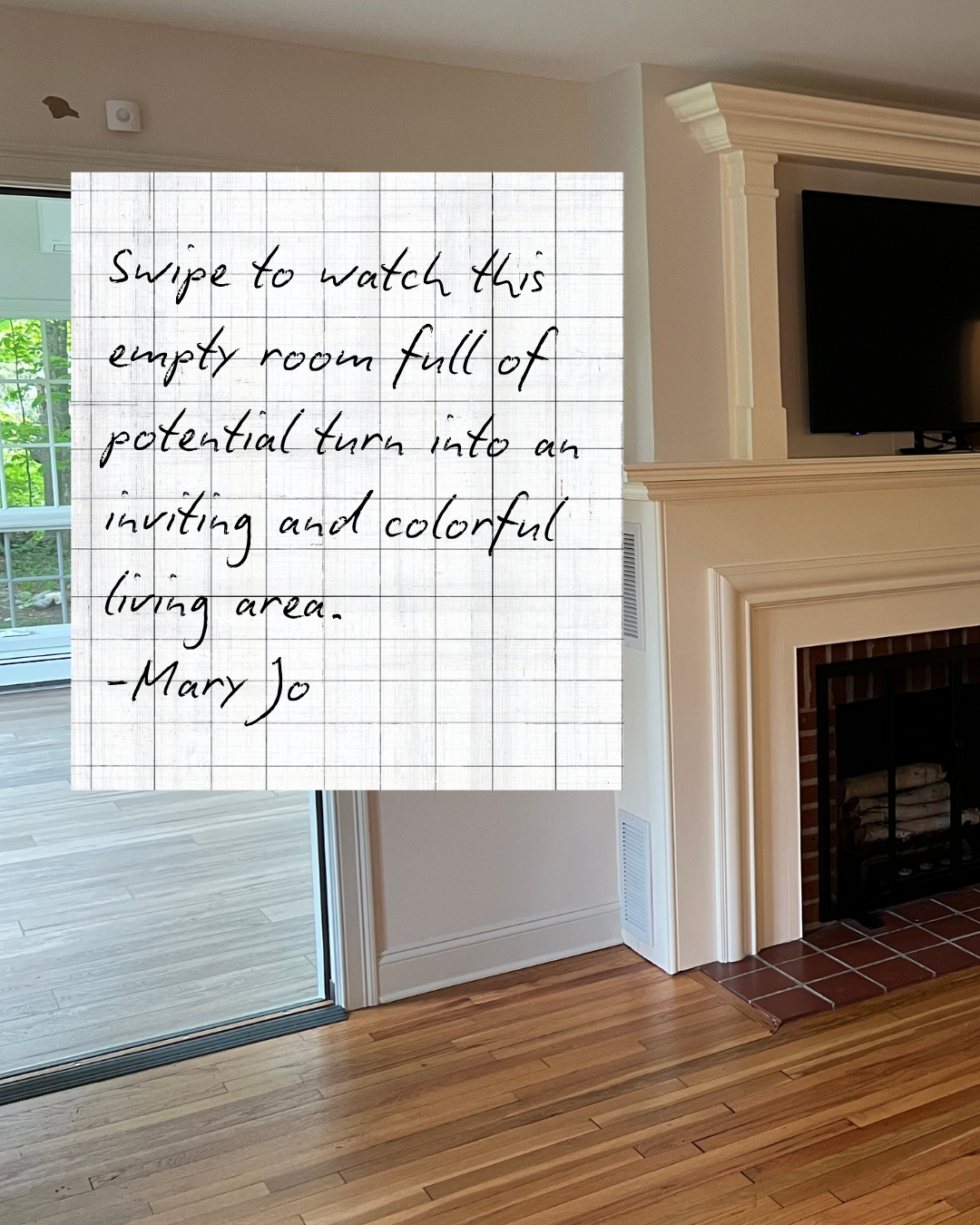
Step 1: Starting with a Blank Slate
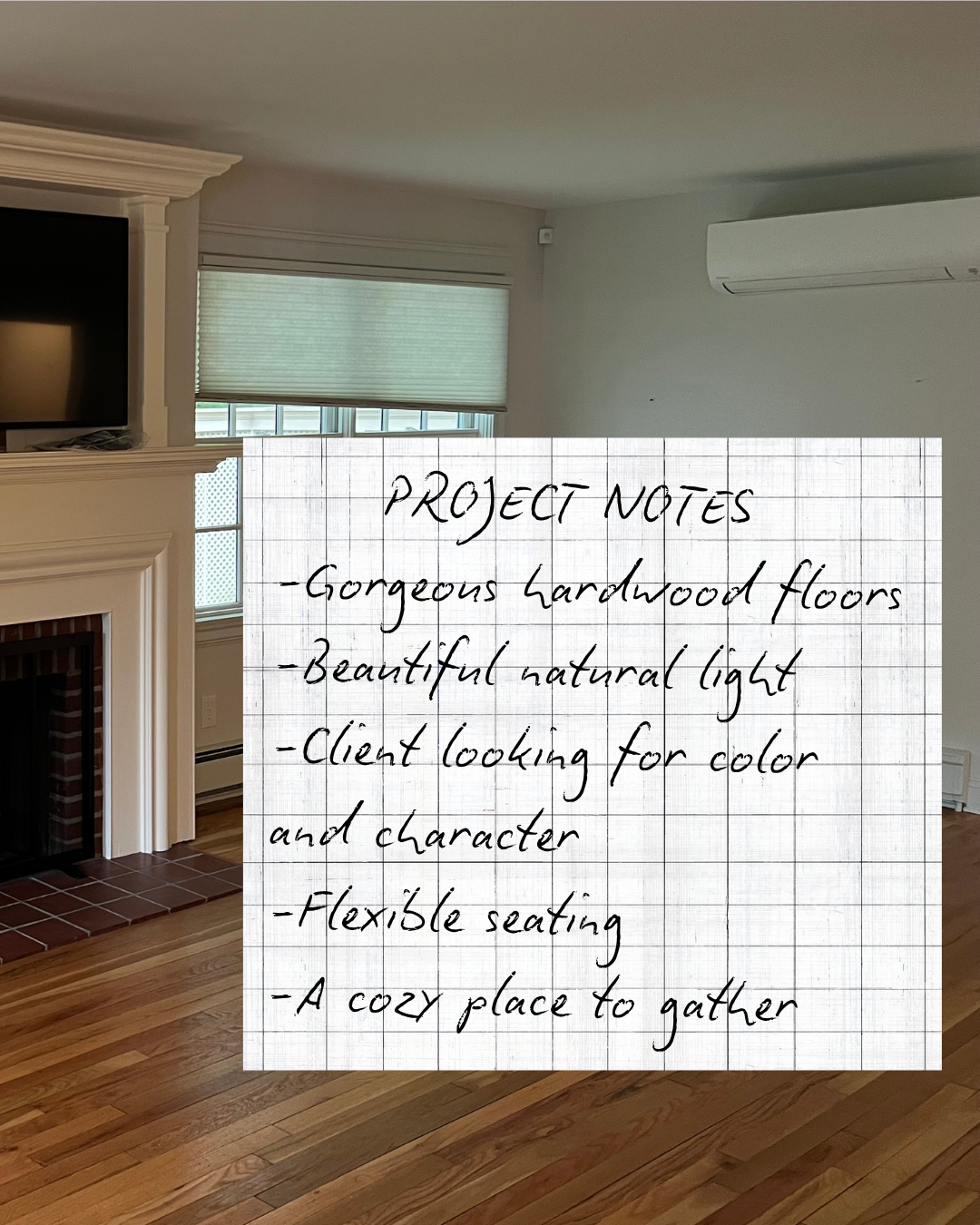
The room had everything going for it structurally: gorgeous original narrow plank (aka strip flooring) hardwood floors, beautiful natural light from an adjacent sunroom and large divided-light windows, a handsome brick hearth fireplace with gorgeous painted wood surround, and generous proportions throughout.
My client came to me with a clear wish list. She wanted color and character. She needed flexible seating that could accommodate a crowd but feel intimate on a quiet evening. Above all, she wanted a cozy place to gather, realx, and be together.
Step 2: Shop the House Before You Shop the Store
Before I ever look new or pull a single sample, I shop my client's home. It is one of my most important rules. People are often sitting on treasure they don't recognize! Pieces with great craftsmanship, beautiful proportions, and real character that just need a new direction. Giving furniture new life reduces waste, supports skilled craftspeople (upholsterers, painters), and creates truly one-of-a-kind pieces.
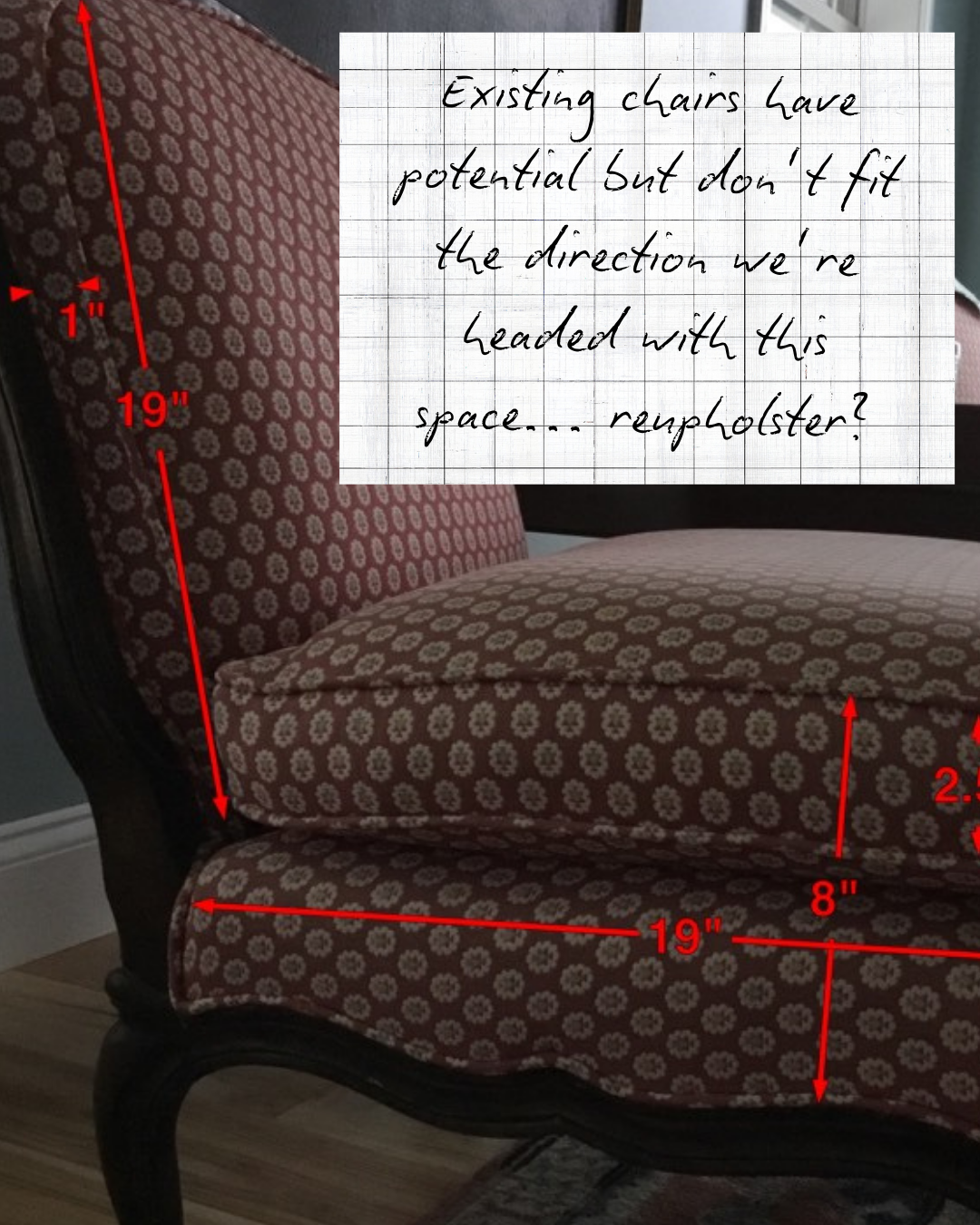
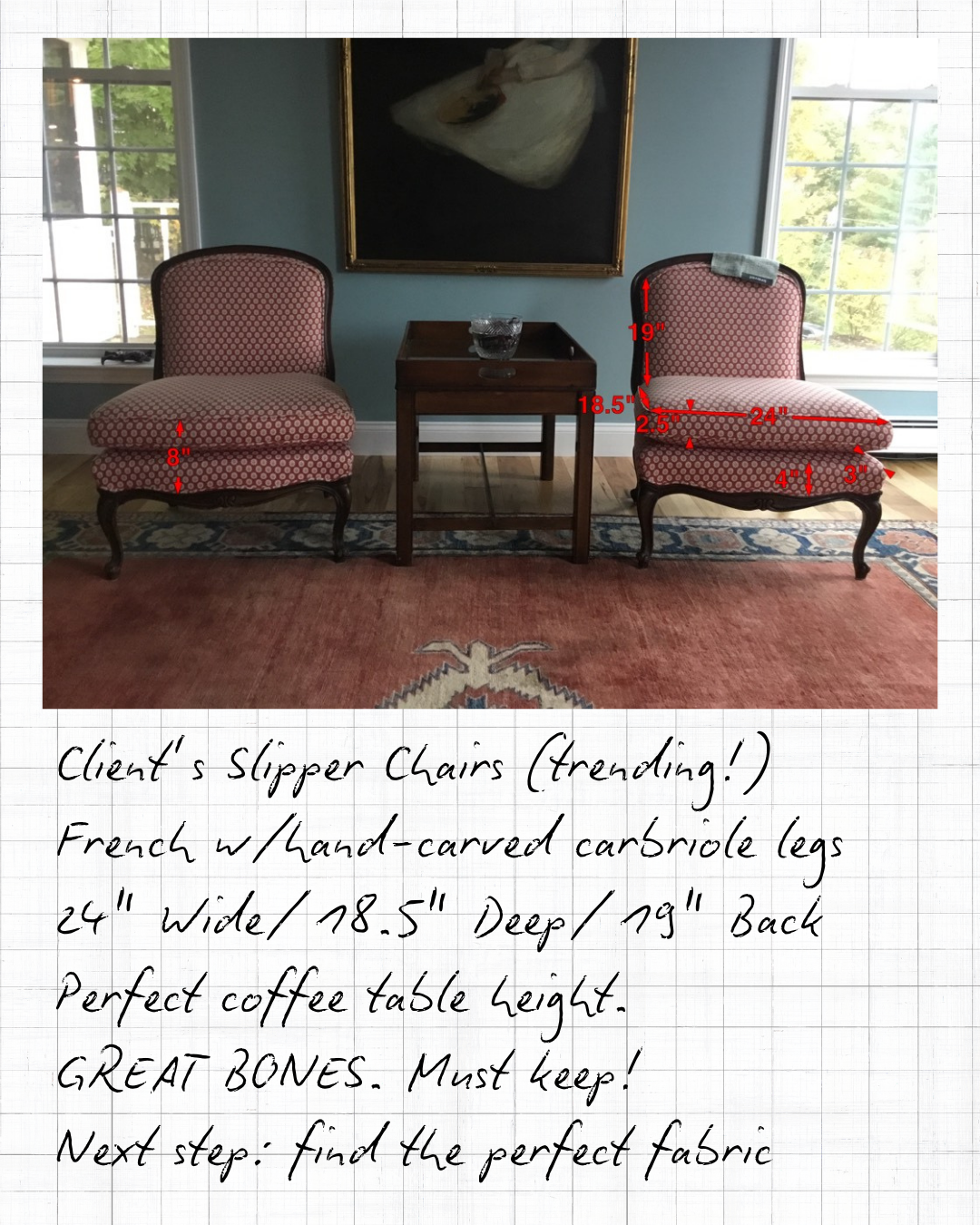
That is exactly what happened here. Tucked against a wall were two French slipper chairs with hand-carved cabriole legs and a beautifully curved silhouette that has recently come roaring back into style. The original fabric was a small-scale burgundy print that didn’t work for the design direction we were going for.
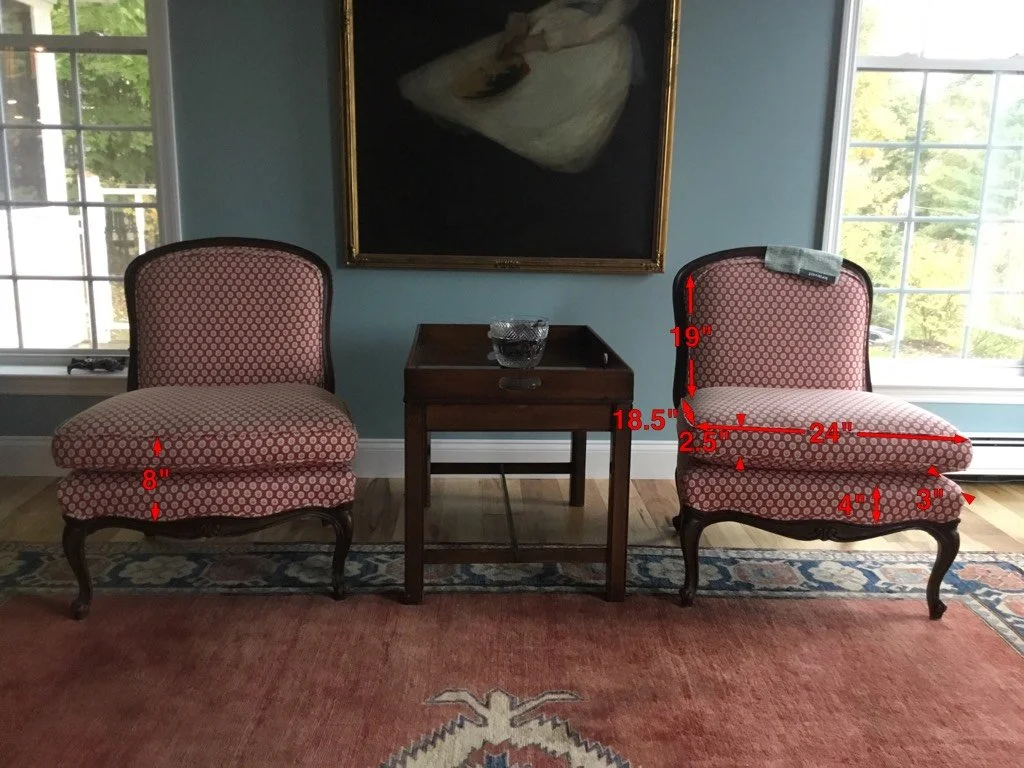
I pulled out my tape measure. 24 inches wide. 18.5 inches deep. A 19-inch back height. The seat height was IDEAL — right at coffee table level, which matters enormously when designing a seating group. These chairs were not going anywhere!
Designer Tip: Always measure existing pieces before deciding to replace them. Vintage and antique furniture often have elements that modern reproductions simply can't replicate — especially at the same price point.
Step 3: Building the Palette
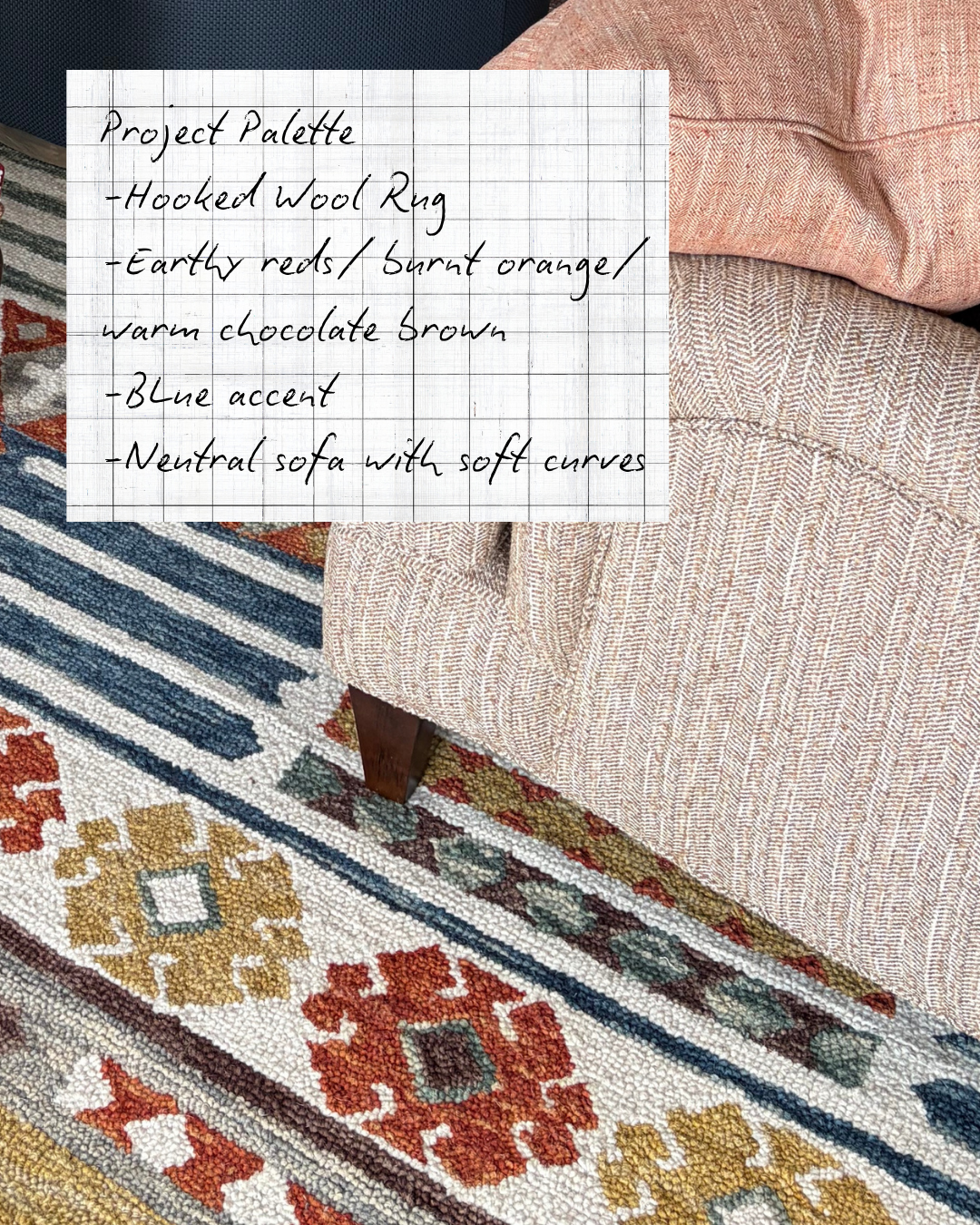
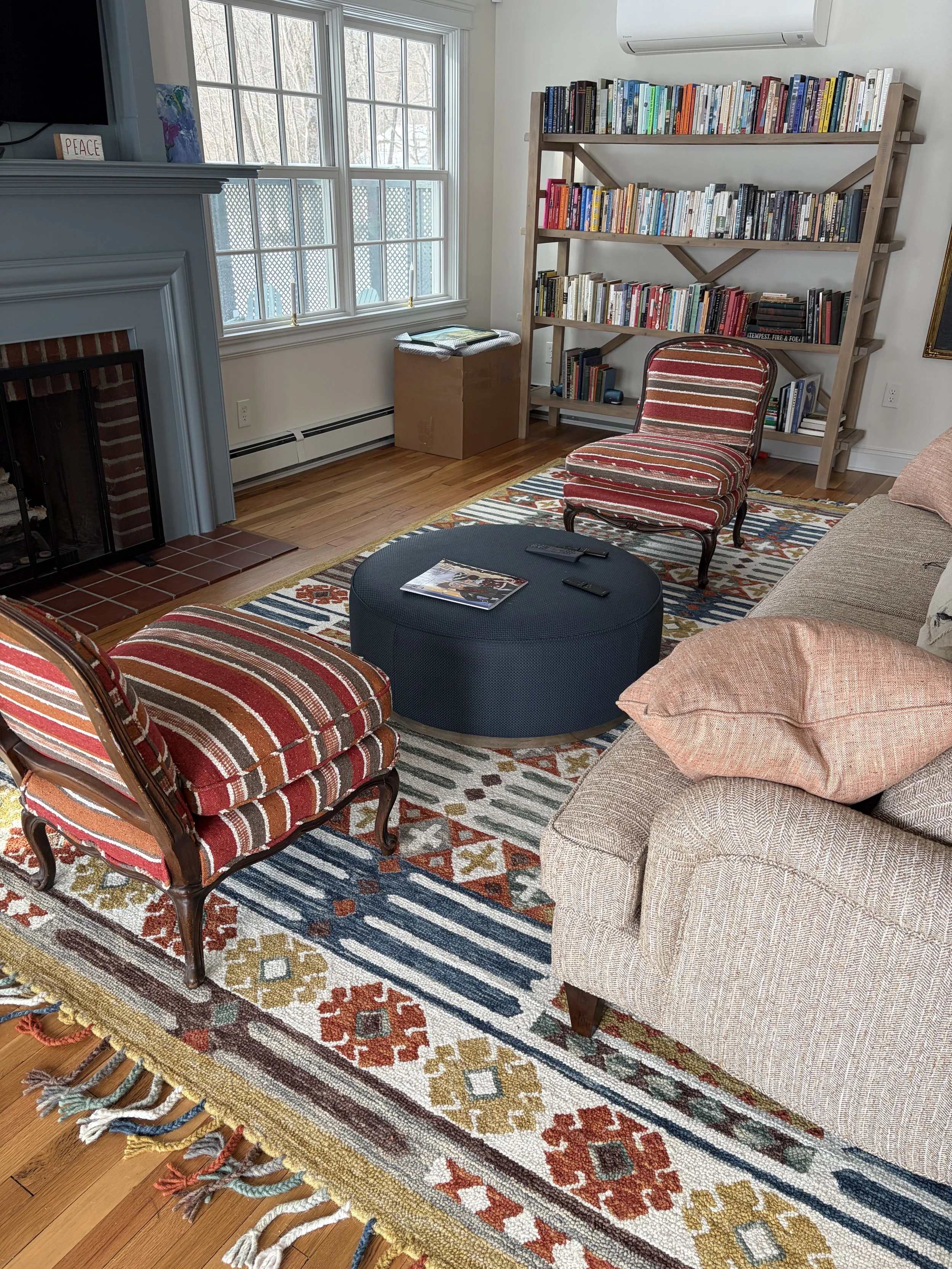
With the bones confirmed, I turned to palette. The anchor of the room was going to be a large flat weave wool rug with an earthy, geometric pattern in deep reds, burnt orange, warm chocolate brown, and a beautiful teal blue accent. It was bold, warm, and full of life.
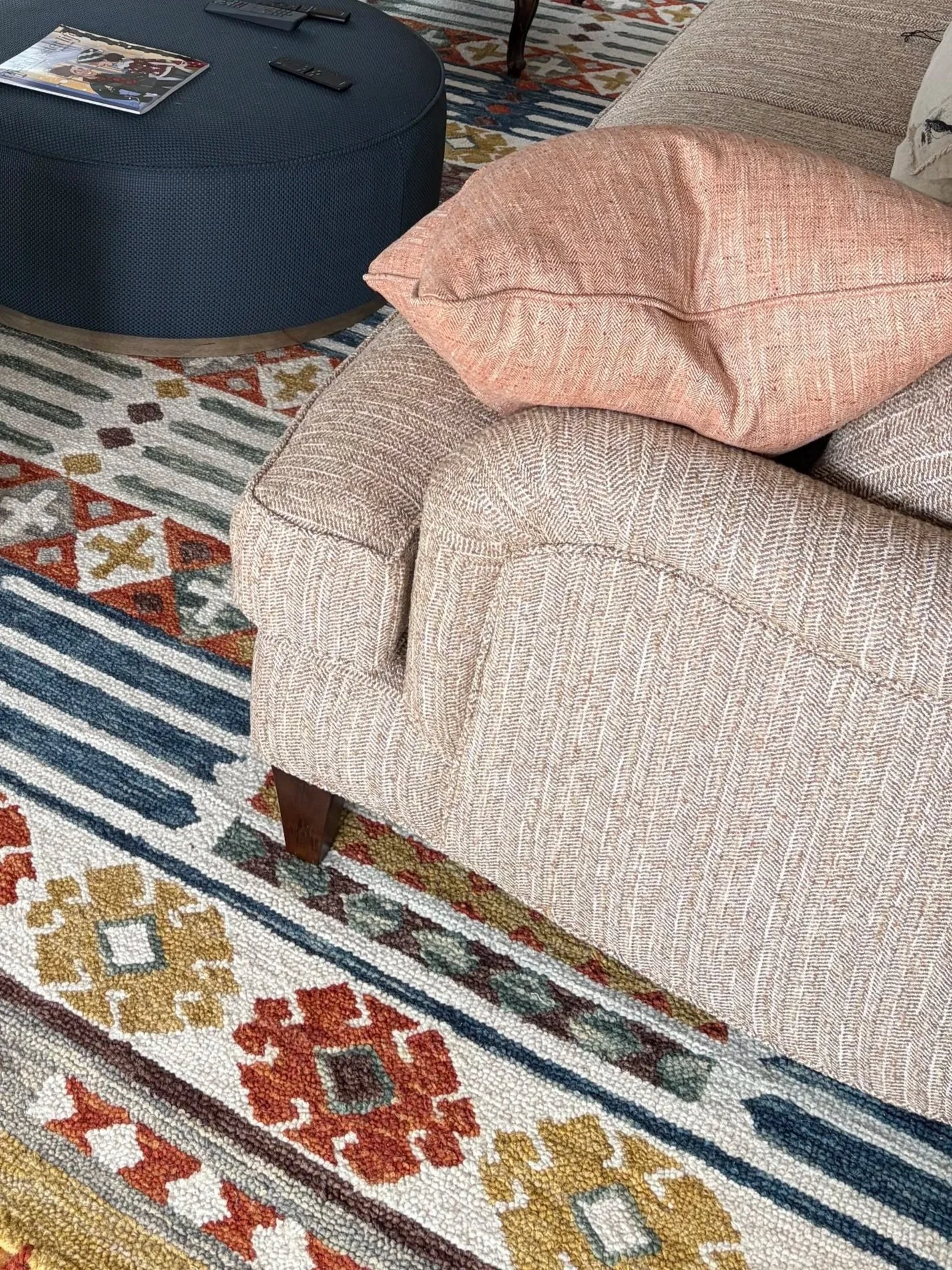
For the sofa, I chose a neutral linen in a soft, warm oatmeal — something with gentle curves and a relaxed profile that would let the chairs and rug do the talking. The seating group would be anchored by a round navy ottoman, which would pull in that blue note from the rug and add a grounding, modern element to the mix.
Step 4: Finding the Perfect Fabric
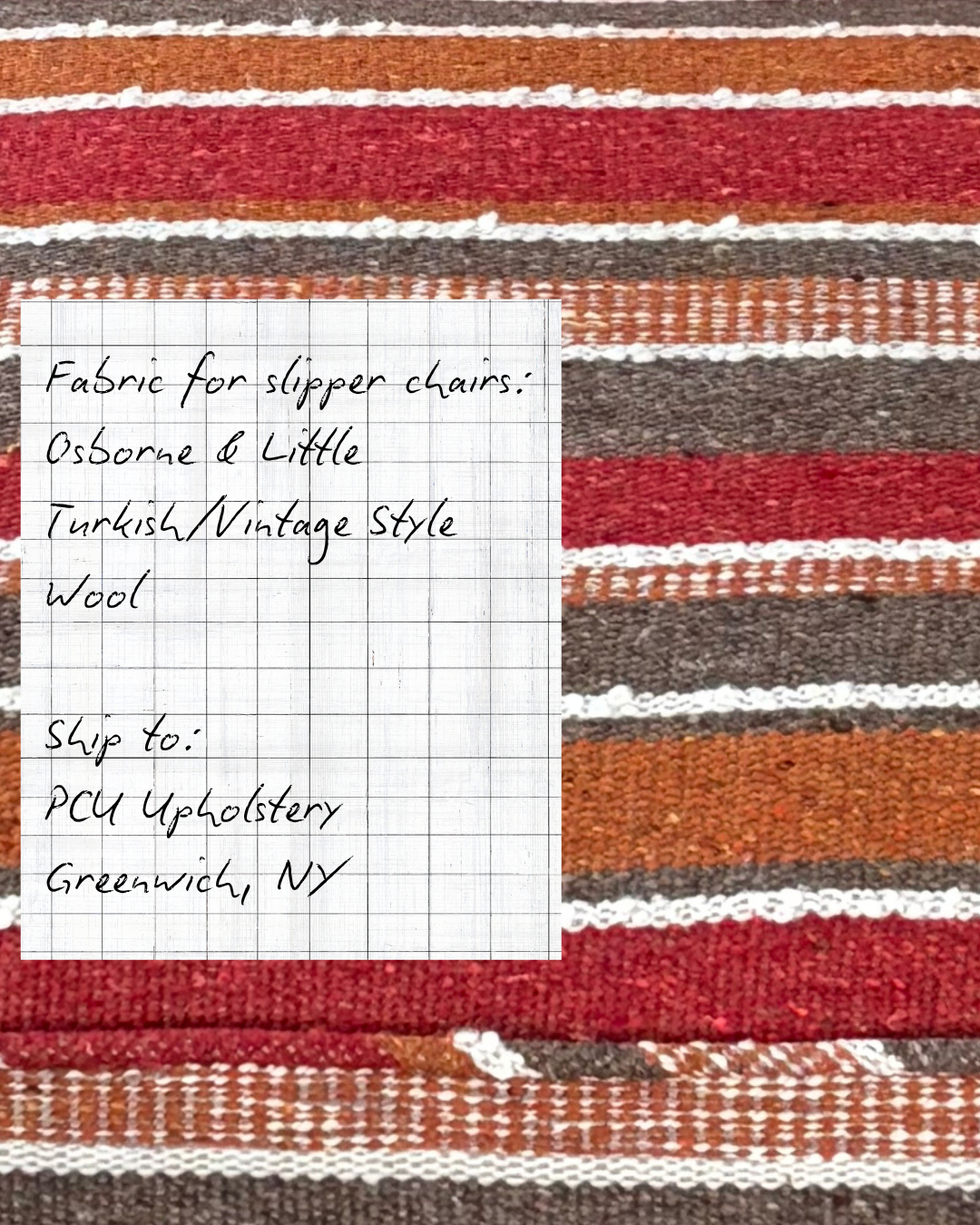
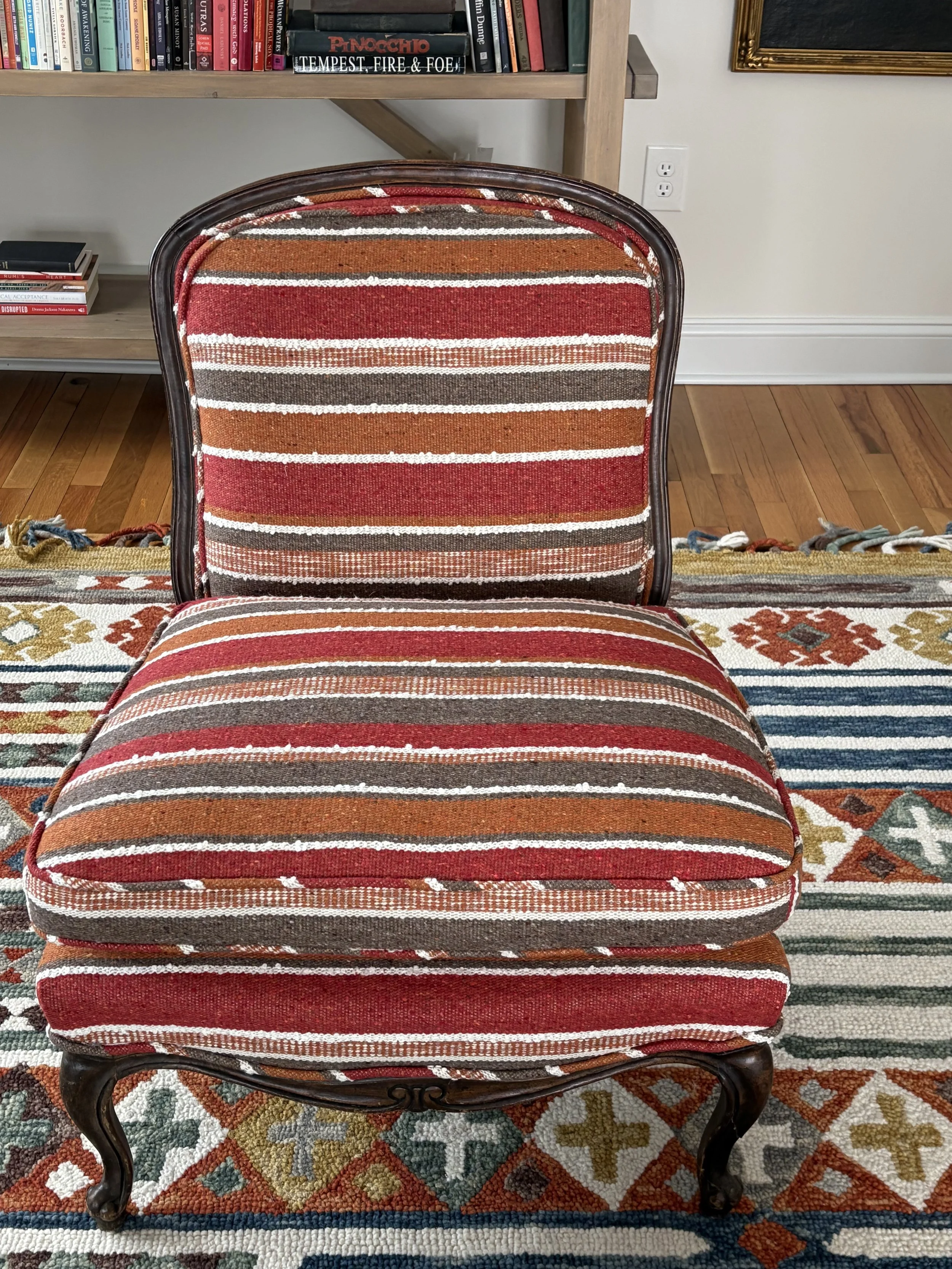
Now for the most exciting part: the fabric. I knew I wanted something that would echo the rug — the same warmth, the same handmade quality, the same bold stripe that felt collected rather than coordinated. After searching through my resources, I found it with Osborne & Little: a Turkish-inspired, vintage-style stripe in 100% wool.
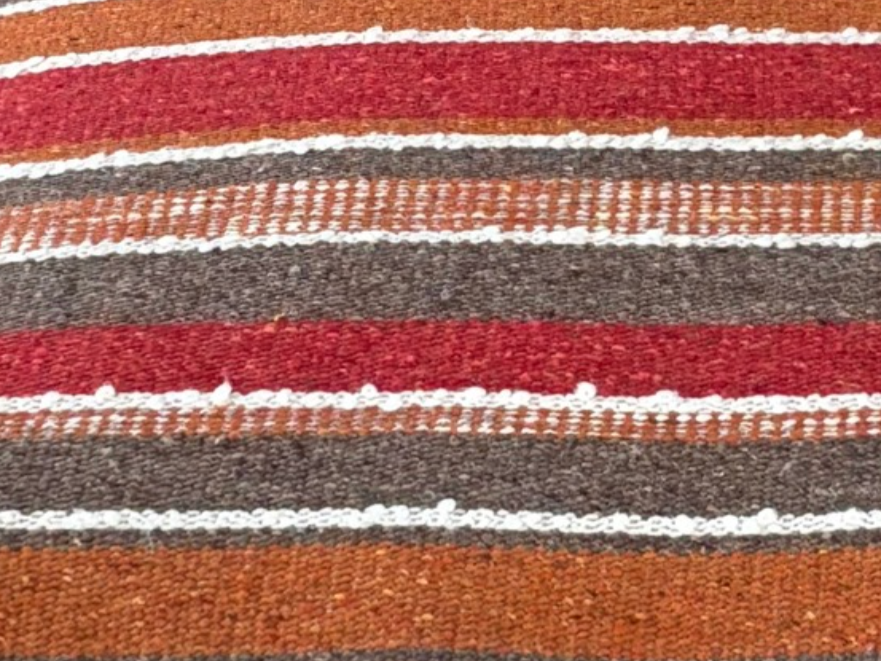
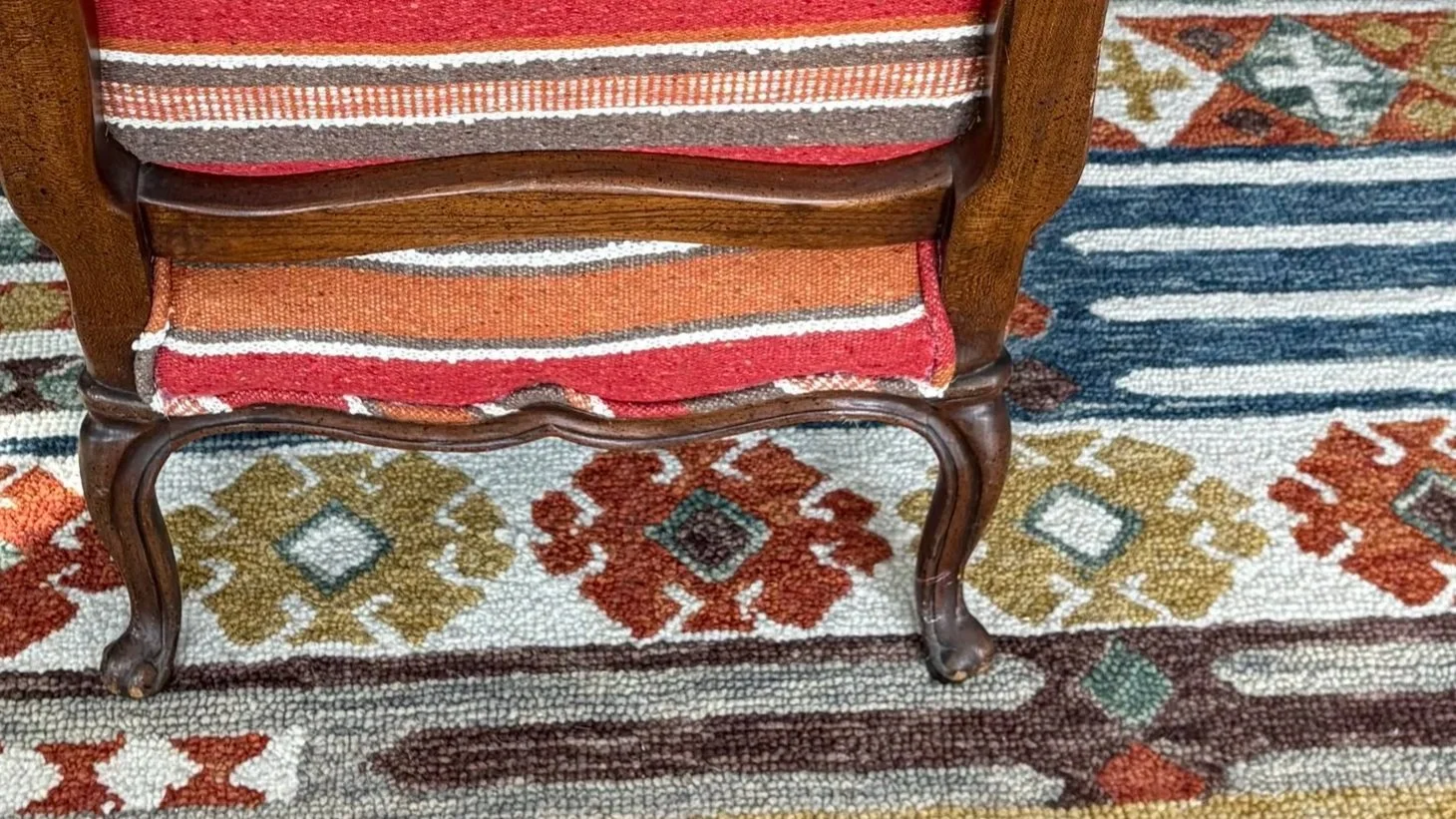
Exactly right — deep brick red, burnt orange, rich brown, cream. Horizontal stripes on a slipper chair silhouette? Dramatic and beautiful. The texture of the woven wool would hold its own next to the rug without competing with it. I ordered the yardage and shipped it directly to my upholsterers.
Designer Tip: When reupholstering, let your largest pattern — rug, drapery, wallpaper — drive the fabric selection for accent pieces. Look for fabrics that share the color story and texture weight, not the same exact pattern.
Step 5: The Transformation
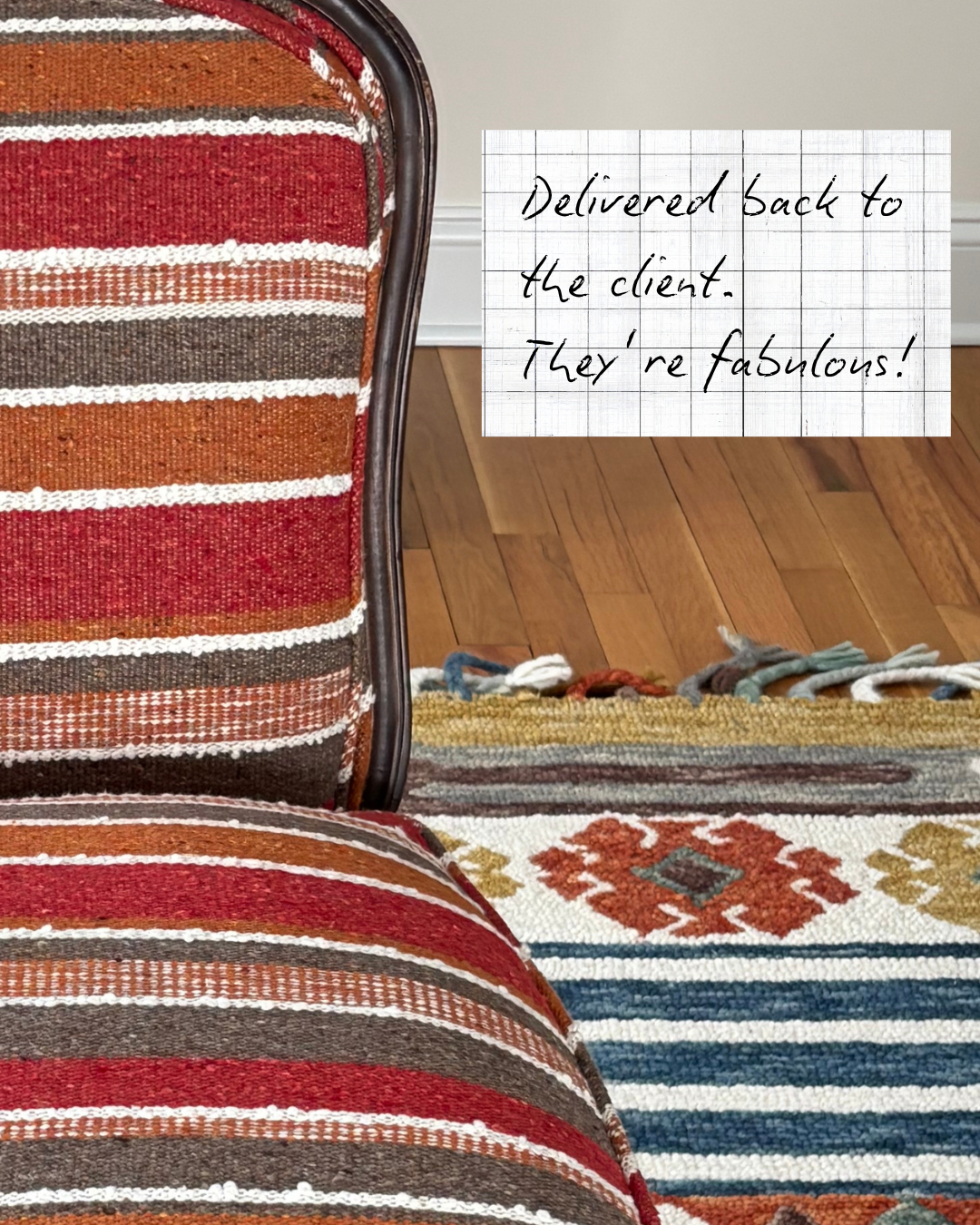
The chairs went to PCU Upholstery in Greenwich, New York — an incredible husband-and-wife team whose craftsmanship I trust completely.
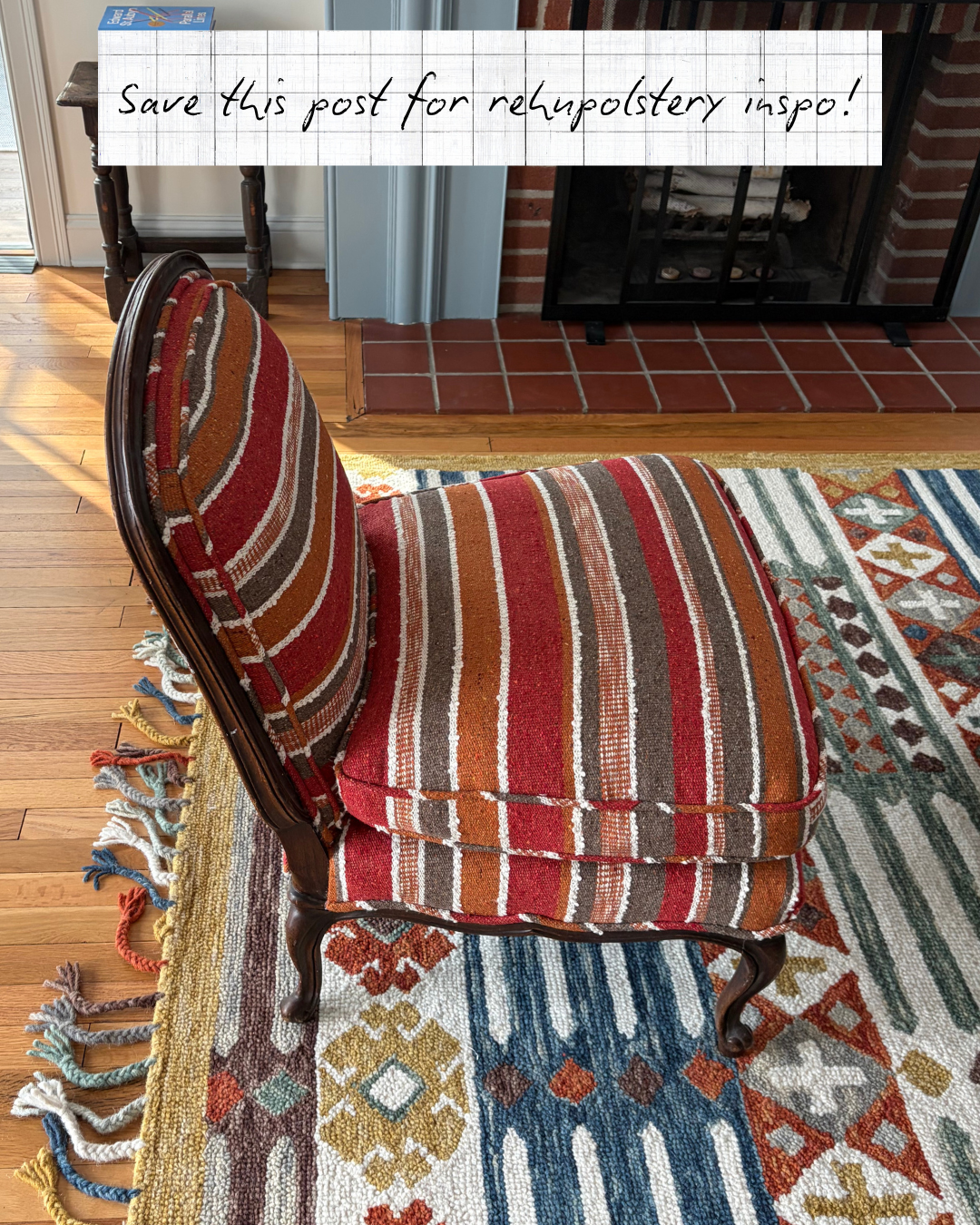
The horizontal stripes aligned beautifully across the seat cushion and back. The dark walnut-stained wood frame was the ideal foil for the warm, earthy tones of the wool. These chairs, which had been invisible for years, had finally found their moment.
The Reveal: A Room That Tells a Story
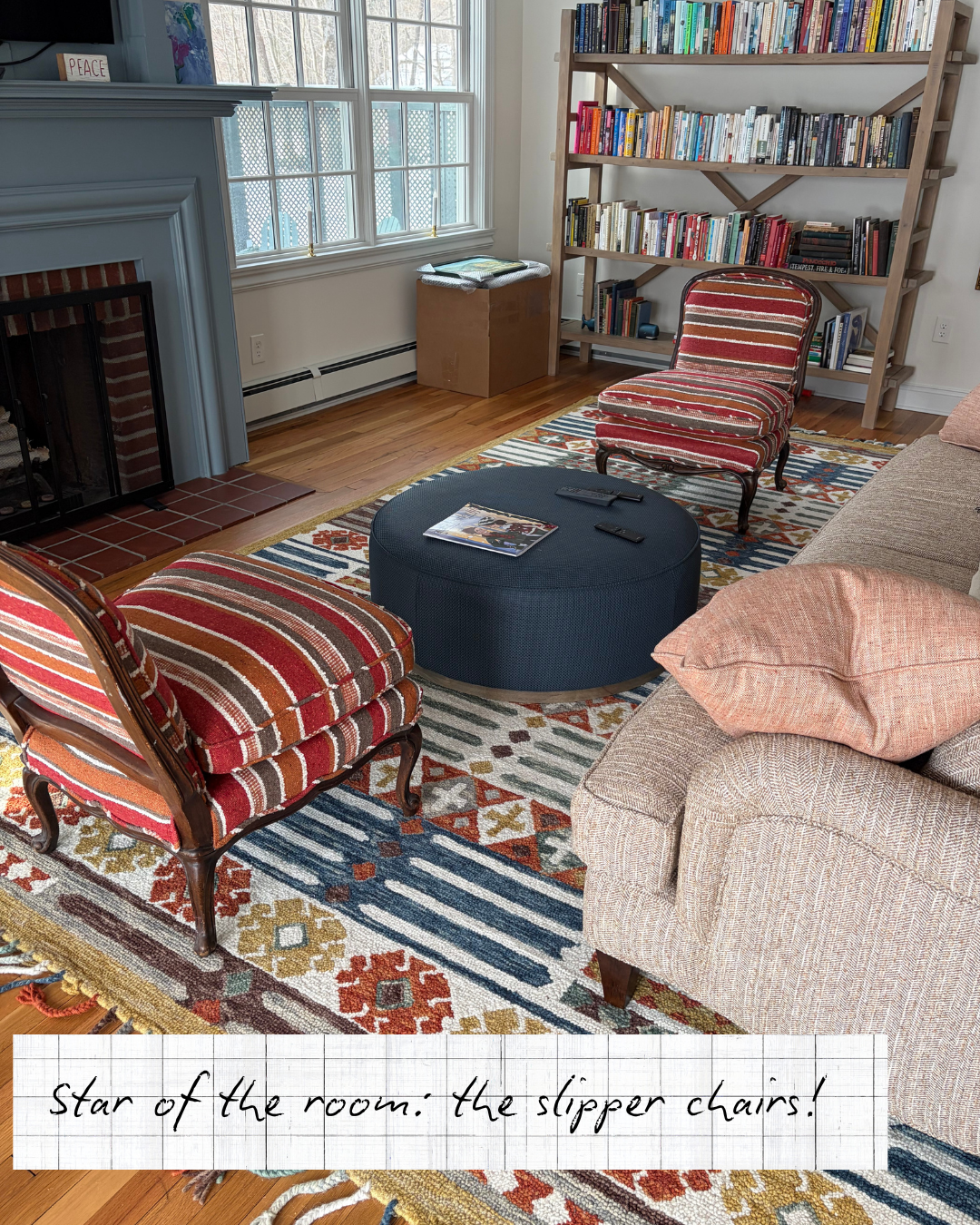
When the full room came together — chairs, rug, sofa, ottoman, bookshelf — it had exactly the quality my client had asked for. Color. Character. Coziness. It felt layered, like a room that had been collected over years.
And the slipper chairs? Undisputed stars of the room. They are proof that the best piece in your home might already be in your home — waiting for someone to see it clearly.
Designer Tip: Before buying anything new, do a full inventory of what you already own. Reupholstering is almost always less expensive than buying a comparable new piece — and the result is unique to you.
Key Takeaways from This Project
Shop your own house first. Vintage pieces often have superior proportions and craftsmanship compared to new furniture at the same or higher price point.
Great bones matter more than current fabric. If the frame, legs, and scale are right, the upholstery is just a starting point.
Let the rug lead the palette. Build your fabric selections around your largest pattern, sharing the color story without matching it exactly.
Reupholstery is sustainable design. Giving furniture new life reduces waste, supports skilled craftspeople, and creates truly one-of-a-kind pieces.
Pair bold pattern with soft neutrals. Give your statement pieces room to breathe.
Interested in a similar transformation for your home? We'd love to help you see the potential in what you already have — and build something beautiful from there!
— Mary Jo, MJG Interiors